
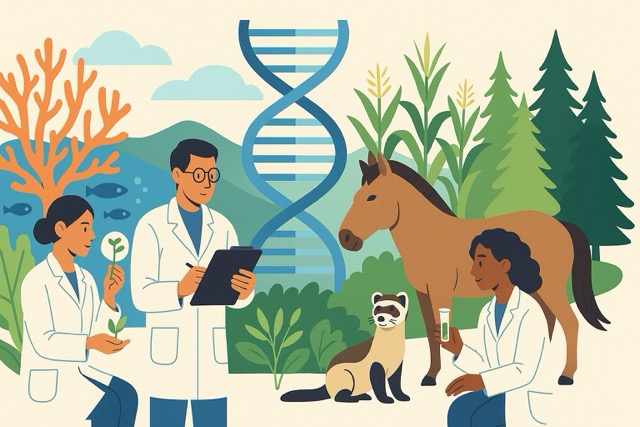
Biotechnology is no longer confined to laboratories and crop engineering—its tools are now helping reshape how you approach biodiversity and conservation. Whether you’re managing a nature reserve, supporting sustainable farming, or working on rewilding projects, biotech innovations offer new solutions to age-old problems. From increasing crop yields with fewer chemicals to cloning endangered species, you’re witnessing the integration of science into conservation efforts like never before. This article will guide you through the practical applications, real-world examples, and potential risks of using biotechnology to support biodiversity, so you can apply the knowledge effectively in your work.
Biotech Farming and Wildlife Coexistence
You’ve probably noticed how industrial farming tends to take a toll on surrounding ecosystems. Fertilizers, pesticides, and heavy land use often disrupt wildlife habitats and reduce plant and insect diversity. That’s where genetically modified crops come in. With insect-resistant and herbicide-tolerant varieties, farmers can cut back on chemical use and preserve more of the local flora and fauna. This isn’t just theory—studies across the U.S., India, and parts of Africa have shown that biotech farming can help preserve beneficial insect populations, limit soil degradation, and promote more targeted land management.
These crops also help reduce greenhouse gas emissions by minimizing tractor runs and field treatments. In your conservation efforts, this translates into an agricultural system that maintains food productivity without destroying the ecosystem around it. You’re not just feeding a population—you’re protecting the pollinators and native species that would otherwise be displaced by conventional farming methods.
Preserving DNA: The Rise of Biobanks
When a species vanishes, its genes disappear with it—unless you’ve stored them ahead of time. Biobanking lets you do exactly that. By freezing genetic material like sperm, eggs, and tissue samples, you’re building a genetic archive that future scientists can use to restore populations or strengthen gene pools.
Institutions like the San Diego Zoo’s Frozen Zoo have been leading this work for years. These banks have material from thousands of animals, including highly endangered ones. When you’re managing breeding programs or researching genetic bottlenecks, biobanks become an essential tool. They allow you to reintroduce lost diversity without removing more animals from their already fragile habitats. It’s a conservation strategy that works quietly in the background—until the day it’s needed.
Cloning: A Real Backup Plan
If you’ve followed recent developments in wildlife conservation, you’ve probably heard of Kurt—the cloned Przewalski’s horse born from DNA preserved for decades. That project showed how cloning isn’t just for movies or science fiction. You can use it to bring back genetic traits that may no longer exist in current populations, adding depth to the gene pool and reducing vulnerability to disease or environmental change.
Cloning doesn’t replace habitat restoration or anti-poaching efforts, but it gives you a powerful backup plan. If an animal is down to a few individuals, every genetic variant counts. With preserved samples and cloning tech, you can expand a population’s genetic base, buying time while natural breeding and conservation practices catch up.
Gene Editing Tools Like CRISPR
CRISPR has moved from cutting-edge science into real-world application. If you’re dealing with an endangered species suffering from a harmful mutation or a disease vulnerability, this technology can help you correct those issues without cross-breeding or generations of trial and error. You can edit a gene directly and pass it on through future offspring.
The process is still tightly regulated, but you’re likely to see it gain more traction in the coming years, especially for disease resistance. When a population is already stressed, preventing even one outbreak could mean the difference between survival and collapse. Used responsibly, gene editing helps you strengthen populations without altering their behaviors or physical traits in unpredictable ways.
Synthetic Biology and Ecosystem Support
Unlike traditional genetic modification, synthetic biology allows you to build entirely new biological systems from scratch. While this may sound extreme, it has practical uses in conservation. For example, synthetic microbes could be designed to break down pollutants in wetlands, giving you new tools to restore damaged habitats without introducing foreign species.
You might also use synthetic biology to create safe bio-pesticides or fertilizers tailored to specific environments. These products can reduce chemical runoff and nutrient overload, which are often responsible for algae blooms and aquatic life decline. By addressing these stressors with engineered organisms, you’re adding a new layer of precision to ecosystem management.
Risks and Responsibility
Using biotechnology comes with real risks you can’t ignore. If a modified organism interbreeds with wild relatives, it may change behaviors, disease resistance, or population balance. This process, sometimes referred to as genetic pollution, can be irreversible. That’s why strict oversight is essential.
You also need to weigh the long-term ecological effects. Some interventions may look harmless today but carry unknown consequences years down the line. That’s why it’s important to include ecologists, ethicists, and local communities in the planning process. When you have diverse input, you’re better positioned to anticipate unintended side effects and ensure that your work strengthens biodiversity rather than threatening it.
Real-World Wins: Proof Biotechnology Can Help
You don’t have to search hard for success stories. In the Great Barrier Reef, researchers are breeding corals with higher heat tolerance using assisted evolution techniques. In forests across the U.S., genetically engineered chestnut trees are being trialed to resist fungal infections that wiped out millions in the past. These aren’t just experiments—they’re practical deployments aimed at restoring ecological balance.
Even trees are getting smarter. Engineered poplars are being used to absorb more carbon dioxide, making them powerful tools in climate strategies that also benefit biodiversity. These applications show that biotech can work hand-in-hand with restoration projects when you deploy it carefully and with a clear conservation goal.
How does biotechnology support biodiversity conservation?
- Reduces pesticide use with engineered crops
- Preserves endangered species through biobanks
- Enables cloning to restore genetic diversity
- Uses CRISPR to remove harmful mutations
- Develops biotech trees for reforestation
- Repairs ecosystems using synthetic biology
Conservation in a Genetically-Modified Era
The way you approach conservation is changing. You no longer have to choose between natural and artificial solutions. When you integrate biotechnology into your strategies, you open doors to higher success rates and broader recovery plans. But it’s your responsibility to use these tools wisely—ensuring that short-term fixes don’t undermine long-term resilience.
Whether you’re overseeing a wildlife corridor, managing crop land near protected areas, or directing a biodiversity initiative, biotech gives you tools that are fast, adaptable, and—when used carefully—safe. Conservation isn’t static, and your toolbox shouldn’t be either. With biotechnology on your side, you’re better equipped to protect what matters most.
For real-time insights and breaking news on science and environmental efforts, connect with me on Twitter.

Nirdosh Jagota is Managing Partner at GRQ Biotech Advisors with 30+ years in the biotech industry. A former executive at Amgen, Genentech/Roche, Merck, and Pfizer, he has led >25 NDAs/BLAs/MAAs and hundreds of INDs across global regulatory, quality, and compliance.