
Artificial Intelligence (AI) is rapidly transforming various industries, pushing the boundaries of technology and innovation. As we look to the future, understanding the key trends and predictions in AI is crucial for staying ahead in an ever-evolving digital landscape. This article explores the latest advancements, emerging trends, and future predictions in AI, providing insights into how this transformative technology will shape our world in the coming years. By the end of this article, you will have a clearer understanding of where AI is heading and its potential impact on different sectors.
Generative AI Advancements
Generative AI has made significant strides in recent years, enabling the creation of new content, such as text, images, and videos, from existing data. This technology leverages advanced algorithms to generate high-quality, creative outputs that can mimic human creativity. In 2024, we expect to see further developments in generative AI, making it more accessible and useful for various applications. For instance, startups like Runway are creating tools that generate high-quality video content, while major studios like Paramount and Disney are exploring AI for enhancing special effects and dubbing performances in multiple languages.
Generative AI is also being used to create synthetic data, which can be utilized to train machine learning models without the need for real-world data. This approach helps overcome privacy concerns and data scarcity issues, enabling more robust and versatile AI models. Additionally, generative AI is expected to revolutionize fields such as art, music, and design by providing new tools for creativity and innovation.
AI in Healthcare
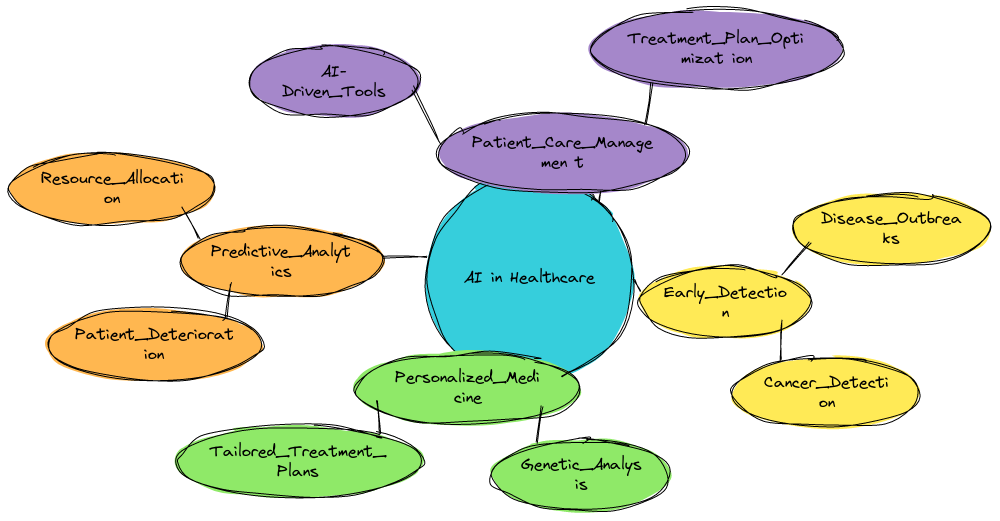
AI’s role in healthcare continues to expand, offering innovative solutions for diagnostics, treatment planning, and patient care. AI-driven tools can analyze medical images, predict disease outbreaks, and personalize treatment plans based on genetic information. The integration of AI in healthcare aims to improve patient outcomes, reduce costs, and increase the efficiency of medical services. For example, AI models are being developed to predict patient deterioration and suggest timely interventions, potentially saving lives and resources.
One notable application is the use of AI for early detection of diseases such as cancer. AI algorithms can analyze medical images with high accuracy, identifying patterns that may be missed by human radiologists. This early detection capability can lead to more effective treatments and better patient outcomes. Additionally, AI is being used to develop personalized medicine approaches, where treatment plans are tailored to the individual based on their genetic makeup and health data.
Autonomous Systems and Robotics
The development of autonomous systems and robotics is another area where AI is making significant strides. These systems are being designed to perform tasks without human intervention, from self-driving cars to robotic assistants in warehouses. In 2024, we anticipate more sophisticated and versatile robots capable of multitasking, thanks to advancements in AI and machine learning. These robots can perform a variety of functions, such as handling delicate objects, navigating complex environments, and interacting with humans in a more natural manner.
Autonomous vehicles, for example, are expected to become more prevalent, with improvements in safety, efficiency, and reliability. AI-powered drones are being developed for applications ranging from delivery services to disaster response. In industrial settings, robots are being deployed for tasks such as quality control, assembly, and logistics, increasing productivity and reducing human error. These advancements in robotics are poised to transform various industries, making operations more efficient and cost-effective.
AI in Business and Productivity
AI is transforming business operations by enhancing productivity and efficiency. Tools like AI-powered analytics, chatbots, and automated workflow systems are becoming integral parts of modern enterprises. These tools help businesses analyze vast amounts of data, automate routine tasks, and provide personalized customer experiences. For example, AI can streamline project management by prioritizing tasks and identifying potential risks, thereby improving overall productivity and decision-making.
In the financial sector, AI is being used for fraud detection, credit scoring, and algorithmic trading. By analyzing transaction data and identifying suspicious patterns, AI systems can detect fraudulent activities in real-time, protecting businesses and consumers. In marketing, AI-driven tools can analyze customer behavior and preferences, enabling personalized marketing campaigns that improve customer engagement and conversion rates. These applications demonstrate how AI is reshaping business processes and driving innovation.
Ethical AI and Governance
As AI becomes more pervasive, the focus on ethical AI and governance intensifies. Ensuring that AI systems are fair, transparent, and accountable is crucial to gaining public trust and avoiding unintended consequences. In 2024, we expect to see more regulatory frameworks and guidelines being implemented to govern the development and deployment of AI. Initiatives like the EU AI Act aim to categorize AI systems based on their risk levels and enforce corresponding regulations to ensure safe and ethical AI practices.
Ethical considerations include addressing biases in AI algorithms, ensuring data privacy, and maintaining transparency in AI decision-making processes. Companies and governments are working together to establish standards and best practices for ethical AI. This collaborative approach aims to create a framework that balances innovation with responsibility, ensuring that AI technologies are developed and used in ways that benefit society as a whole.
AI in Education
AI is poised to revolutionize education by providing personalized learning experiences and improving administrative efficiency. AI-powered tools can assess students’ strengths and weaknesses, offering tailored learning paths that adapt to their needs. Additionally, AI can assist educators by automating grading, managing administrative tasks, and providing insights into student performance. These advancements aim to create a more effective and engaging educational environment for both students and teachers.
Adaptive learning platforms, for example, use AI to customize educational content based on individual learning styles and progress. Virtual tutors powered by AI can provide additional support to students, helping them understand complex subjects and improve their performance. AI is also being used to analyze educational data, identifying trends and insights that can inform policy decisions and improve educational outcomes. These applications highlight the potential of AI to enhance the learning experience and make education more accessible and effective.
AI in Climate and Environmental Science
AI is increasingly being used to address environmental challenges, from climate change to wildlife conservation. AI models can analyze vast amounts of environmental data, predict climate patterns, and suggest mitigation strategies. For instance, IBM and NASA have developed AI models that use satellite data to track deforestation and predict crop yields, helping to manage natural resources more sustainably. These applications demonstrate AI’s potential to contribute to environmental protection and sustainability efforts.
In climate science, AI is being used to develop more accurate climate models, predicting future climate scenarios and informing policy decisions. AI-powered tools are also being deployed for monitoring air and water quality, detecting pollution sources, and managing natural disasters. In wildlife conservation, AI is helping to track endangered species, monitor their habitats, and combat illegal poaching. These efforts are crucial for preserving biodiversity and ensuring a sustainable future for our planet.
The Future of AI: Predictions and Challenges
Looking ahead, the future of AI holds both exciting opportunities and significant challenges. The continued advancement of AI technologies promises to transform industries, improve lives, and address global challenges. However, it also raises important questions about job displacement, data privacy, and ethical considerations. Ensuring that AI is developed and deployed responsibly will be key to realizing its full potential while minimizing negative impacts.
One major prediction is the development of Artificial General Intelligence (AGI), which aims to create AI systems with human-like cognitive abilities. While AGI is still in its early stages, significant progress is expected in the coming years. Another prediction is the increased integration of AI with other emerging technologies, such as the Internet of Things (IoT) and blockchain, creating new possibilities for innovation and connectivity. As AI continues to evolve, it is crucial to address the ethical and societal implications to ensure that its benefits are shared widely and equitably.
In conclusion, the future of AI is bright, with numerous advancements and applications on the horizon. From healthcare and education to business and environmental science, AI is set to transform various aspects of our lives. By staying informed about the latest trends and predictions, we can better prepare for the changes and opportunities that AI will bring. As we navigate this rapidly evolving landscape, it is essential to focus on ethical AI practices and governance to ensure that the benefits of AI are realized responsibly and equitably.

Nirdosh Jagota is Managing Partner at GRQ Biotech Advisors with 30+ years in the biotech industry. A former executive at Amgen, Genentech/Roche, Merck, and Pfizer, he has led >25 NDAs/BLAs/MAAs and hundreds of INDs across global regulatory, quality, and compliance.