
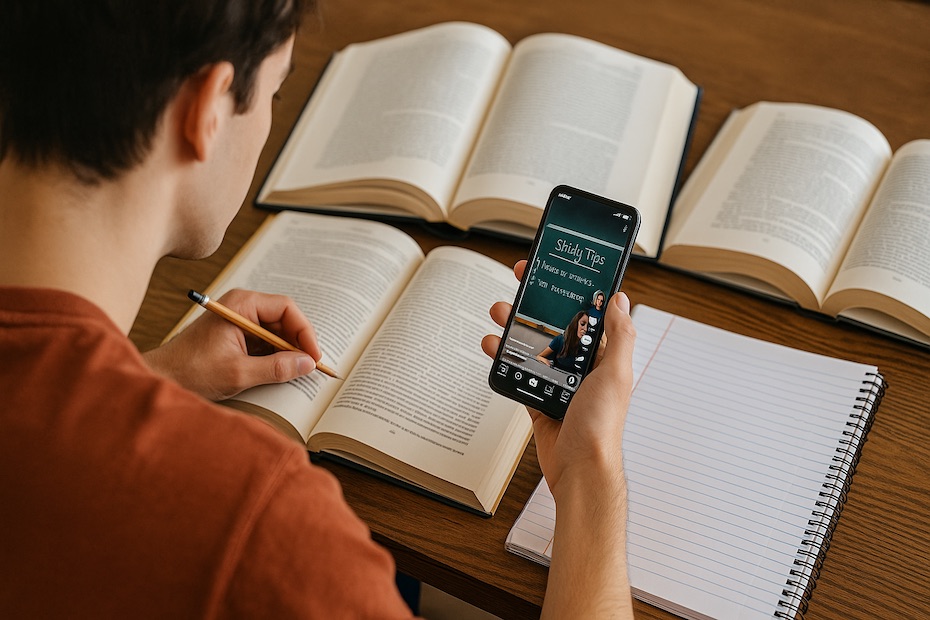
Gen Z students increasingly use TikTok as a search engine because it delivers fast, visual, and peer-recommended answers that feel more relevant and relatable than traditional Google results.
You’ve grown up swiping, not scrolling. When you need an answer—how to cite a source, decorate a dorm, or structure a resume—you’re more likely to open TikTok than Google. That shift isn’t just a generational quirk. It’s reshaping how information is found, shared, and trusted. In this article, you’ll explore why Gen Z turns to platforms like TikTok for search, when it works best, where Google still holds ground, and how to combine both tools for better learning and decision-making.
What Is Replacing Google for Gen Z Students?
You’re not abandoning search engines—you’re rethinking what “searching” looks like. For you, Google often feels cluttered, impersonal, and too slow. Platforms like TikTok, Reddit, and AI tools now fill that gap with faster, visual, and social answers. According to multiple studies, nearly 40% of your peers prefer TikTok or Instagram for location-based queries instead of traditional search or maps.
Think about it: Would you rather skim through SEO-packed blogs, or watch a 15-second TikTok where someone shows you how they styled their college dorm on a budget? TikTok lets you “see” results before clicking through.
Why Visual Search Feels More Useful
Visual-first platforms work because they show you context, emotion, and user experience in one swipe. When someone explains the Pomodoro method on TikTok using timers, music, and captions, you retain more than just text. You see the process in action—and that makes it feel real and repeatable.
That style fits how you process information. Short-form video teaches through demonstration. It’s direct and engaging, and often uses humor or storytelling to make concepts stick. You’re not just reading a definition—you’re seeing it applied.
How TikTok’s Algorithm Personalizes Your Learning
Another reason TikTok outpaces Google for many queries is how fast it adapts. Its algorithm doesn’t wait for you to type perfect keywords. It observes what you watch, like, and rewatch, then builds a content feed around your interests—whether it’s academic hacks, mental wellness tips, or productivity playlists.
This predictability makes searching feel passive. You don’t have to know the right phrase or filter settings. The platform surfaces relevant content organically. That keeps you curious, even when you’re not actively researching.
What Questions Work Best on TikTok?
You’ll get the most value from TikTok search when you’re looking for:
- Study methods like time blocking or active recall
- Productivity setups (desk tours, apps, daily routines)
- College prep content (move-in hacks, budgeting tips)
- Software how-tos (Notion templates, Canva tricks)
- Career tips (resume visuals, job interview vlogs)
These topics don’t require academic sources. They’re practical, peer-tested, and visual—perfect for a platform designed to capture attention quickly. But if you’re doing serious research, TikTok has limits.
When Google Still Outperforms TikTok
Despite TikTok’s growing appeal, you still need Google for accuracy, depth, and citation-worthy content. If you’re writing a paper or need verifiable sources, Google gives you access to libraries, government sites, databases, and long-form analysis. It’s structured for information reliability, not speed.
When you need details—like peer-reviewed studies on climate change or legislative timelines—Google is the better tool. You can also filter by publication date, author credibility, and relevance. TikTok simply can’t compete with that kind of data control.
Why Peer Trust Drives TikTok Use
What drives this trend isn’t just speed—it’s trust. Gen Z trusts people over institutions. You’re more likely to believe another student showing their SAT prep checklist than a polished university site. Social platforms feed that with user-generated proof: screen recordings, book flips, real-life vlogs. They feel relatable and current.
TikTok’s community features reinforce trust. Comments act as a quick fact-checking system. You know to scan them to see if others agree—or warn against bad advice. That form of crowdsourced validation is something Google lacks.
How to Search Smarter in the TikTok Era
Here’s what works: Combine tools. Use TikTok for ideas and overviews, then jump to Google for verification and depth. Let Reddit help you understand the “why,” and ChatGPT fill in the blanks with explanation or clarity.
Let’s say you’re researching the 80/20 rule. TikTok might give you a 15-second video showing how to apply it to time management. That helps spark understanding. But then search Google Scholar for academic references to back up your claims in an essay. Each tool serves a different purpose.
What Makes TikTok Search Work?
- Answers come fast and visual
- Explanations are peer-led and relatable
- Feeds are personalized without effort
- Learning feels active, not passive
- Community comments act as real-time filters
How This Shift Affects Educators and Parents
If you’re teaching or advising Gen Z, you can’t ignore TikTok’s role in learning. It’s where your students go first. That means schools, libraries, and content creators need to meet students on their platforms—with credible, digestible content. But don’t just copy textbook material. Show workflows, tools, mistakes, and real stories.
If you’re a parent, recognize this shift isn’t about laziness. It’s about preference. Your kids aren’t rejecting learning—they’re choosing formats that work better for their brains and routines.
The Future of Search Will Be Hybrid
As TikTok adds more search features, and Google adds more visual and AI-based content (like YouTube Shorts in results), the lines will blur. Expect more voice-driven, video-first, and social-integrated search habits ahead. Your job isn’t to pick one—it’s to know how and when to use each effectively.
In Conclusion
You’re not abandoning Google; you’re expanding your search habits to include tools that fit your style: visual, fast, and community-driven. TikTok isn’t replacing traditional search—it’s redefining what good search feels like. By mixing platforms, verifying information, and tailoring your methods to the moment, you’ll get smarter, faster, and more efficient at learning what matters.
For deeper discussions on how Gen Z consumes information, listen to my SoundCloud podcast featuring interviews with educators, social media researchers, and students about the shift from traditional search to visual discovery platforms.

Nirdosh Jagota is Managing Partner at GRQ Biotech Advisors with 30+ years in the biotech industry. A former executive at Amgen, Genentech/Roche, Merck, and Pfizer, he has led >25 NDAs/BLAs/MAAs and hundreds of INDs across global regulatory, quality, and compliance.