
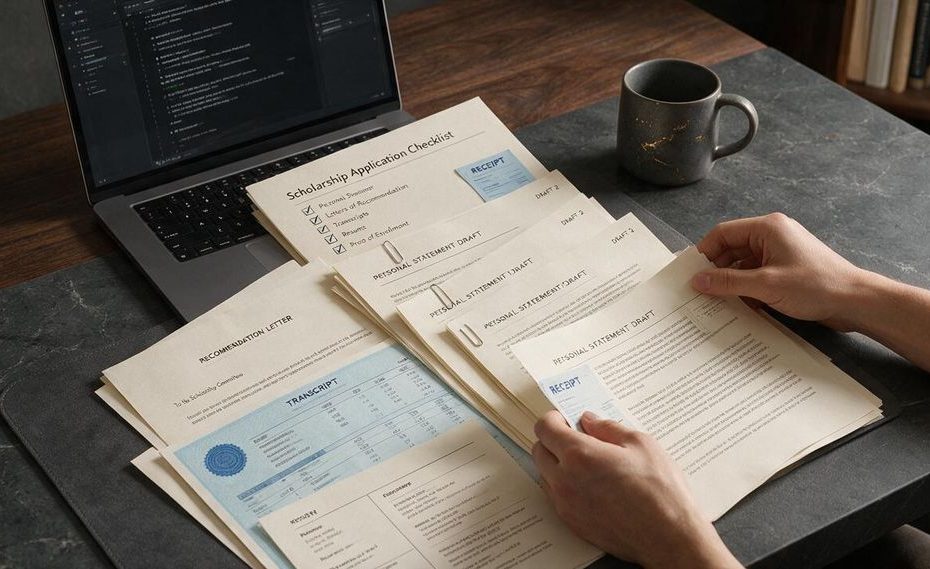
A scholarship evidence file is a secure, organized collection of the records you’re likely to reuse across scholarship applications. Building it early lets you respond to short deadlines without scrambling for transcripts, financial documents, activity details, or recommendation letters.
A promising scholarship can become stressful when its deadline is close and your supporting documents are scattered across email accounts, school portals, and filing cabinets. A well-maintained file gives you one reliable place to find what you need. It also helps you protect sensitive information, track missing records, and submit accurate applications faster.
Why A Scholarship Evidence File Saves You Time And Money
Scholarship applications often request similar information, but they don’t always request it in the same format. One provider may accept an unofficial transcript, another may require an official copy, and another may ask you to enter every grade manually. Your scholarship evidence file keeps the source material ready, so you can adapt it without rebuilding your academic history for every application.
This preparation also protects you from avoidable delays. Teachers may need time to prepare recommendation letters, school offices may not process transcript requests immediately, and financial records may be controlled by a parent or guardian. Gathering those materials before a deadline gives everyone enough time to help you.
Your file also makes it easier to compare applications and avoid missed opportunities. You can quickly determine whether you meet an award’s academic, financial, service, leadership, or residency requirements. Instead of starting from zero, you review the criteria, select the right evidence, and focus your energy on the parts that require fresh writing.
Build The Core Of Your Scholarship Evidence File
Start with your academic records. Keep current grade reports, an unofficial transcript for reference, and instructions for requesting an official transcript from your school. If you have standardized test scores, save the score reports and note how an organization can receive official results when required.
Add a student resume and a detailed activity list. Record clubs, sports, employment, volunteer work, leadership positions, academic programs, honors, and awards. For every entry, include the organization’s name, your role, participation dates, approximate hours, responsibilities, and measurable outcomes you can verify.
Create a writing folder for personal statement drafts, short-answer responses, and descriptions of your academic or career goals. Save clean master copies rather than submitting the same response without review. Scholarship prompts often look similar, but your answer still needs to address the exact question and word limit.
Collect Evidence Of Activities, Service, Leadership, And Awards
An activity list tells a scholarship committee what you did, but supporting evidence can confirm the details. Save award letters, certificates, program completion records, employment records, event materials, and written confirmations from supervisors. A clear email from an organization may also help document your role or service hours.
Use descriptive filenames so you don’t need to open every file to identify it. A name like Community-Food-Drive-Volunteer-Confirmation is more useful than scan004. Include a year or school grade when it helps distinguish similar records, but keep sensitive personal information out of the filename.
Don’t wait for formal recognition before recording an activity. Many valuable responsibilities don’t produce a certificate, particularly family duties, part-time work, informal leadership, and long-term service. Write down the dates, duties, hours, contact person, and results while the information is still easy to remember, then collect confirmation when it’s available.
Prepare Financial Need Documentation Carefully
Need-based scholarships may ask for information connected to the Free Application for Federal Student Aid (FAFSA), family income, or other financial circumstances. Federal Student Aid recommends having tax returns, W-2 forms, and records of untaxed income available when preparing the FAFSA. The scholarship provider’s instructions determine which records you must submit.
Keep a copy of your FAFSA Submission Summary or Student Aid Report (SAR) when available. Some providers may use FAFSA-related information to review financial eligibility, but you shouldn’t assume that every organization wants the same document. Read the application instructions and provide only what the provider requests.
Ask a parent or guardian early if you’ll need records under their control. Explain what the scholarship requests, where the information will be submitted, and when it’s due. Don’t keep unnecessary copies of tax forms, identification records, or account statements in an ordinary scholarship folder.
Organize Digital And Physical Copies Safely
Your digital file should use a simple folder structure that you can understand at a glance. Create main folders for academic records, activities and service, honors, recommendations, financial documents, identification, writing drafts, and submitted applications. Inside those folders, separate current records from older versions.
Keep a physical binder only for documents that are easier to manage on paper or difficult to replace. Use labeled dividers and store the binder in a private location. Avoid carrying original identification, tax records, or irreplaceable certificates unless an application process requires them.
Digital and physical storage serve different purposes. Digital copies make searching, editing, and uploading easier, while paper copies can provide backup for certain original records. Scan important pages clearly, check that every edge is visible, and save documents in a widely accepted format, typically Portable Document Format (PDF), unless the provider requests another file type.
Protect Sensitive Scholarship Documents
Separate ordinary application materials from private financial and identification records. Your resume, essay drafts, activity list, and general awards can stay in a working scholarship folder. Tax forms, financial records, and documents containing a Social Security number belong in restricted storage with stronger access controls.
Use a strong, unique password and activate multi-factor authentication (MFA) when your storage service offers it. Don’t share an entire folder when a provider needs one document. Upload the requested file through the organization’s official application system rather than sending sensitive records through an unverified form or message.
Review every document before uploading it. Confirm that it belongs to you, contains the requested pages, and doesn’t reveal information the scholarship never requested. Delete temporary downloads from shared computers and sign out of school, library, or public devices when you finish.
Request And Manage Recommendation Letters
Ask for recommendations early, preferably before scholarship deadlines begin to cluster. Choose teachers, counselors, supervisors, or community leaders who can describe your work with specific details. Give each recommender your resume, activity list, goals, scholarship information, and submission deadline.
A general recommendation letter may work for multiple scholarships when the application permits reuse. A tailored letter can be a better fit when an award emphasizes a particular subject, service record, leadership role, or career goal. Some providers require recommenders to upload letters directly, so keeping a personal copy won’t replace their submission process.
Review your recommendation plan each academic year. Update recommenders when your achievements, responsibilities, or goals change, and ask whether they’re comfortable preparing a current version. Keep a tracker with the recommender’s name, the date you asked, the deadline, the delivery method, and the status of the request.
Keep Your Records Current And Application Ready
An outdated file creates almost as much work as a missing one. Update your activity list after completing a project, earning an award, starting a job, or taking on a leadership responsibility. Save current grade reports when they’re issued and replace draft documents when a corrected version becomes available.
Use version names that prevent confusion. Labels like Student-Resume-Current, Personal-Statement-Master-Draft, and Transcript-Unofficial-Current make the right document easier to locate. Move older versions into an archive rather than leaving several nearly identical files in your active folder.
Set a recurring review before your busiest scholarship periods. Open every folder, remove duplicates, test shared links, confirm that files display properly, and list anything you still need to request. A short review after each school term can keep the file accurate without turning maintenance into a large project.
Avoid Common Scholarship Document Mistakes
Don’t assume one file will meet every provider’s rules. An unofficial transcript may help you complete an application, but the provider may still require an official copy. A general resume may also need editing when an award requests a dedicated service record, employment history, or honors list.
Avoid vague activity descriptions. “Helped at events” gives a reviewer little useful information, whereas a record of your duties, hours, dates, and documented results supports a stronger application. Stay accurate and don’t combine unrelated activities to make your participation appear longer or larger.
Don’t submit documents without checking their contents and presentation. Blurry scans, missing pages, outdated contact information, and unexplained filenames can slow your submission. Confirm the file type, size limit, naming rules, and privacy requirements before uploading anything.
Follow A Simple Build And Refresh Timeline
Build the first version of your scholarship evidence file as soon as you begin researching awards. You don’t need every document before you start. Create the folder structure, add what you already have, and maintain a checklist of missing records.
During the school year, update the file whenever something changes. Add new grades, awards, service hours, work duties, leadership roles, and polished writing samples. Request records controlled by other people or offices well before you expect to submit an application.
Before applying, create a separate folder for that scholarship. Copy only the relevant materials into it, add the application instructions, and name files according to the provider’s rules. After submission, save a copy of your responses, confirmation message, deadline, and any follow-up requirements.
What Should You Include In A Scholarship Evidence File?
- Transcripts or grade reports
- Standardized test scores
- Letters of recommendation
- FAFSA information and requested tax records
- A resume with activities and honors
- Personal statement drafts
Build It Once, Then Keep It Useful
Your scholarship evidence file should make applications easier without exposing private information or filling your storage with outdated copies. Build a clear folder system, collect records as you earn them, and separate sensitive documents from everyday application materials. Keep your resume, activity list, academic records, writing drafts, and recommendation plan current. Before every submission, compare the provider’s instructions with the evidence you have rather than sending the same package automatically. A maintained scholarship evidence file gives you more time to improve your answers and less reason to panic when a deadline is close.
References
- Federal Student Aid: Filling Out the FAFSA
- Federal Student Aid: Types of Financial Aid
- College Board BigFuture: Grants and Scholarships
- Fastweb
- Scholarships.com
- Common App
- National Association of Student Financial Aid Administrators.

Nirdosh Jagota is Managing Partner at GRQ Biotech Advisors with 30+ years in the biotech industry. A former executive at Amgen, Genentech/Roche, Merck, and Pfizer, he has led >25 NDAs/BLAs/MAAs and hundreds of INDs across global regulatory, quality, and compliance.