
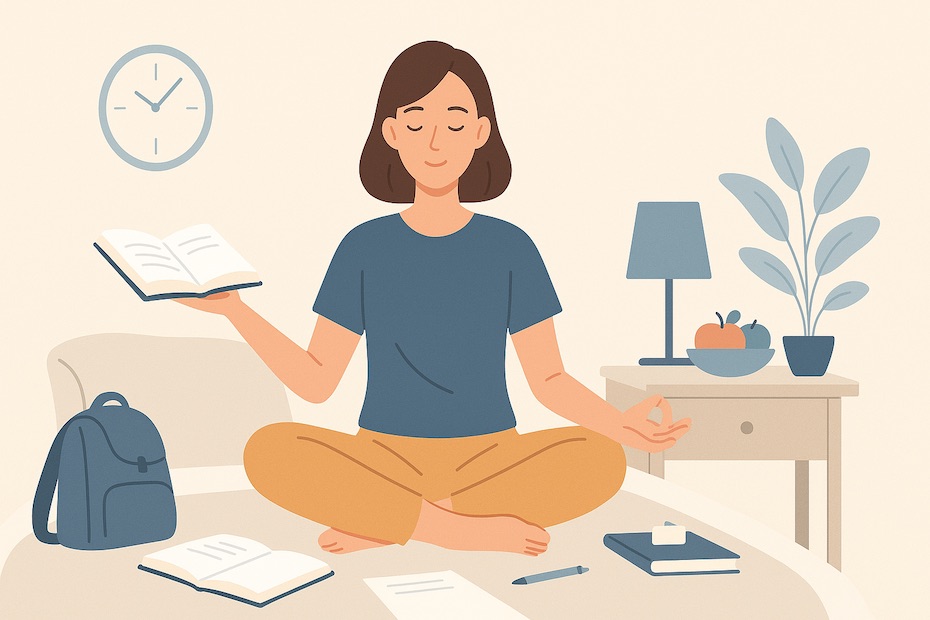
You can manage stress and anxiety in college by applying practical mental health hacks that strengthen focus, calm, and resilience. These are proven, easy-to-apply strategies that improve both well-being and academic performance.
This article gives you 10 actionable hacks based on evidence, real student experiences, and expert guidance. You’ll see how to integrate these into your daily life and sustain them long term.
1. Prioritize Consistent Sleep
Sleep directly affects your mood, memory, and ability to regulate stress. Aiming for 7–9 hours each night allows your body and mind to reset. When you sacrifice rest, anxiety symptoms worsen and your focus declines.
College routines can be unpredictable, but a consistent bedtime and wake-up schedule stabilizes your energy. Keep your room cool and dark, avoid caffeine late in the day, and set device limits before bed to improve sleep quality.
Good sleep is not just about avoiding fatigue—it strengthens resilience against worry and supports stronger academic performance.
2. Use Mindfulness and Meditation
Mindfulness trains you to stay present instead of spiraling into anxious thought cycles. Even a few minutes of deep breathing or guided meditation reduces stress and sharpens attention.
Studies confirm mindfulness lowers student anxiety and improves sleep. You don’t need complex tools—apps like Headspace, Calm, or YouTube sessions work. Over time, practicing consistently builds long-term stress tolerance.
This habit takes discipline, but five minutes a day creates a noticeable difference in calmness and concentration.
3. Exercise Regularly for Stress Relief
Exercise is a natural stress reducer. Moving your body lowers cortisol, releases endorphins, and resets your mind. You don’t need to be an athlete—walking, yoga, body-weight routines, or intramural sports all count.
In studies, college students who committed to at least 20 minutes of daily activity experienced measurable reductions in stress and anxiety. Even short bursts between classes or study sessions give your mind a break.
Consistency matters more than intensity. The goal is to keep your body active to maintain both physical and mental resilience.
4. Manage Your Time Effectively
Poor time management fuels stress. When you procrastinate and then scramble, your anxiety spikes. Building structure into your days prevents this cycle.
Use digital calendars, task apps, or planners to block out study time, breaks, meals, and relaxation. Breaking large assignments into smaller steps reduces overwhelm and helps you maintain control.
A structured routine creates predictability. By knowing what’s next, you minimize last-minute panic and give yourself space to breathe.
5. Build Strong Social Connections
Isolation worsens stress and anxiety. Maintaining a network of supportive peers gives you perspective and encouragement when pressures rise.
You don’t need dozens of friends. A few trusted connections—roommates, classmates, mentors—are enough to build a sense of belonging. Study groups, campus clubs, or volunteering also strengthen social ties.
When you engage consistently, you remind yourself you are not alone in your challenges, which reduces mental strain and builds resilience.
6. Limit Digital Distractions
Constant notifications and social media scrolling fragment your focus and raise anxiety. Setting limits helps you reclaim calm and productivity.
You can schedule device-free hours, especially before bed or during study blocks. Apps that block distracting sites or track usage keep you accountable.
Less screen time equals more concentration. This also frees mental space to connect in person, reflect, or simply rest your mind.
7. Practice Gratitude Daily
Gratitude shifts your focus from what’s wrong to what’s right. This cognitive shift reduces worry and strengthens emotional balance.
Writing down three things you are grateful for each night is a powerful habit. Some students link this to daily rituals—at meals or before bed.
Research shows that gratitude practices improve mood, life satisfaction, and stress management. It’s a low-effort, high-return hack for mental well-being.
8. Use Breathing and Quick Relaxation Techniques
Fast-acting tools help you manage stress in the moment. Breathing techniques like box breathing or progressive muscle relaxation calm your nervous system quickly.
Just two minutes of focused breathing lowers heart rate and reduces tension. These hacks are easy to apply before exams, presentations, or overwhelming study blocks.
With repetition, your body learns to reset more effectively during high-pressure situations.
9. Maintain Healthy Nutrition and Hydration
Food impacts your stress response. Eating balanced meals with protein, whole grains, and vegetables stabilizes mood and prevents energy crashes that trigger anxiety.
Skipping meals or relying on caffeine and sugar can worsen stress symptoms. Carrying water and choosing nutritious snacks during long study sessions keeps you sharp.
When your body is fueled properly, your brain can focus on academic and social demands without additional strain.
10. Seek Support When Needed
Self-care is powerful, but sometimes you need professional guidance. Knowing when to reach out is a sign of strength, not weakness.
Most campuses offer counseling centers, teletherapy options, or student support groups. Using these services gives you structured help for managing anxiety.
Developing the habit of seeking support ensures that stress never grows into burnout or chronic issues. It’s about sustainability, not just short-term relief.
What are simple ways college students can reduce stress and anxiety?
- Prioritize sleep and rest
- Practice daily mindfulness
- Exercise consistently
- Use time management tools
- Build social support networks
In Conclusion
Managing stress and anxiety in college comes down to consistent habits that keep your mind and body in balance. By applying these 10 hacks—sleep, mindfulness, exercise, structure, and support—you protect your mental health and strengthen your academic performance.
To explore more resources and actionable guides for managing stress in high-pressure environments, visit my profile here: nirdoshjagota.net

Nirdosh Jagota is Managing Partner at GRQ Biotech Advisors with 30+ years in the biotech industry. A former executive at Amgen, Genentech/Roche, Merck, and Pfizer, he has led >25 NDAs/BLAs/MAAs and hundreds of INDs across global regulatory, quality, and compliance.